10 preguntas de selección múltiple · Dificultad: Mixto · Unidad: Language in Use. Elige una alternativa y revisa la explicación.
Pregunta 1FácilIdentificar
Choose the correct verb form to complete the sentence about a past event:
'Yesterday, Camila ________ her English homework before dinner.'
Ver respuesta y explicación
Respuesta correcta: B. Para hablar de una acción completada en el pasado ('Yesterday'), se utiliza el Past Simple del verbo. Como 'finish' es un verbo regular, se le añade la terminación '-ed', resultando en 'finished'.
Pregunta 2FácilIdentificar
Which of the following sentences correctly describes a past habit that the person does not do anymore?
Ver respuesta y explicación
Respuesta correcta: A. La estructura correcta para hablar de hábitos del pasado que ya no ocurren es 'used to' + verbo en infinitivo ('used to play'). Las otras opciones presentan errores de ortografía o gramática en la estructura.
Pregunta 3FácilAplicar
Read the conversation and complete the blank space:
Tomás: 'I'm so thirsty!' Sofía: 'Don't worry, I ________ get you a glass of water.'
Ver respuesta y explicación
Respuesta correcta: C. Se utiliza 'will' para decisiones espontáneas o del momento (ofrecimientos inmediatos) ante una situación que acaba de ocurrir, como el tener sed.
Pregunta 4IntermedioAplicar
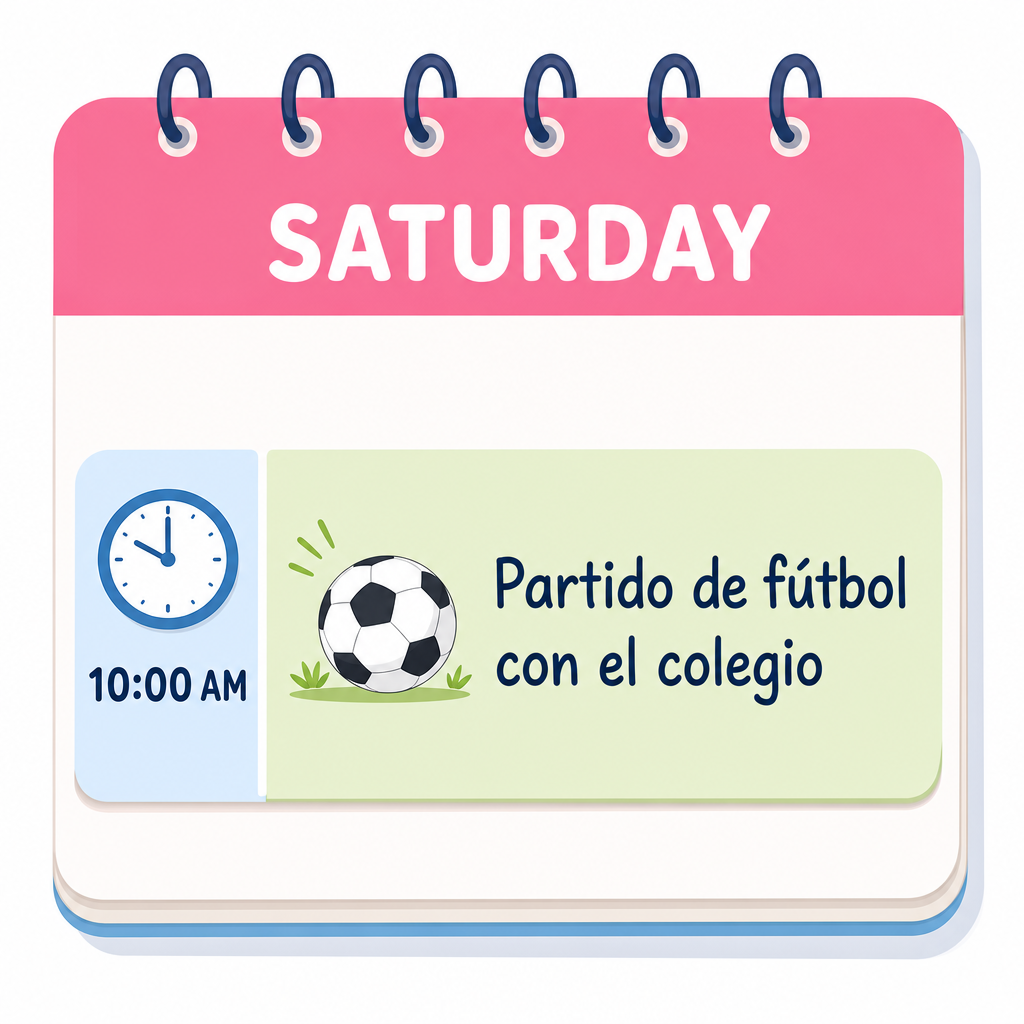
De acuerdo con la imagen adjunta, look at the image below showing Lucas's calendar for next Saturday. Based on his planned schedule, complete the sentence with the correct future form:
'On Saturday morning, Lucas ________ play soccer with his school team.'
Ver respuesta y explicación
Respuesta correcta: B. Como se trata de un plan ya agendado y decidido con anticipación (evidenciado en su calendario), se debe usar la estructura de futuro 'be going to'. Al ser tercera persona singular ('Lucas'), corresponde 'is going to'.
Pregunta 5IntermedioAplicar
Choose the correct option to complete the negative sentence in Past Simple:
'We ________ to the beach last weekend because it was raining.'
Ver respuesta y explicación
Respuesta correcta: C. Para formar oraciones negativas en Past Simple, se utiliza el auxiliar 'didn't' seguido del verbo en su forma base (infinitivo sin 'to'). Por lo tanto, la combinación correcta es 'didn't go'.
Pregunta 6IntermedioAnalizar
Complete the question with the correct words:
'________ you ________ your grandparents in Temuco last summer?'
Ver respuesta y explicación
Respuesta correcta: A. Las preguntas en Past Simple se construyen con el auxiliar 'Did' al inicio, seguido del sujeto y el verbo principal en su forma base/infinitiva ('visit').
Pregunta 7DifícilAnalizar
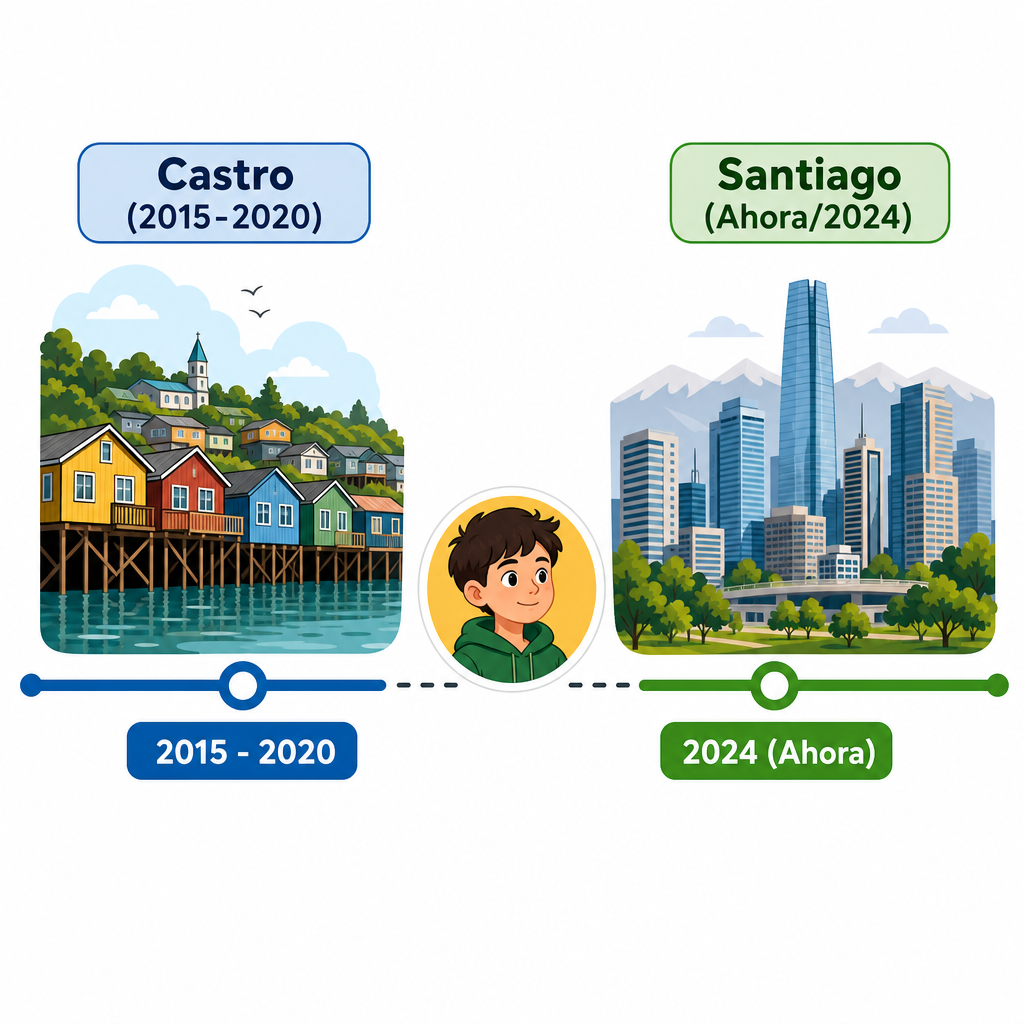
De acuerdo con la imagen adjunta, observe the timeline showing Benjamín's life changes over the years. Which sentence correctly describes his past habit compared to his present life based on the timeline?
Ver respuesta y explicación
Respuesta correcta: A. La línea de tiempo muestra que desde 2015 a 2020 (pasado) Benjamín vivía en Castro, y en la actualidad (2024) vive en Santiago. Por ende, solía vivir en Castro pero ya no: 'used to live in Castro, but now he lives in Santiago'.
Pregunta 8DifícilAnalizar
Read the following dialogue and choose the correct combination of verbs to complete it:
Diego: 'What are your plans for the summer vacation?' Valentina: 'I ________ travel to Valparaíso with my family. We already bought the bus tickets! And I promise I ________ send you a postcard.'
Ver respuesta y explicación
Respuesta correcta: B. Para planes decididos previamente (comprar los pasajes), se usa 'am going to'. Para promesas hechas en el momento del habla ('I promise...'), se utiliza 'will'.
Pregunta 9DifícilAplicar
Identify the grammatically correct sentence that uses an irregular verb in the past tense:
Ver respuesta y explicación
Respuesta correcta: B. El verbo 'write' (escribir) es irregular, por lo que su forma en Past Simple es 'wrote'. Agregar '-ed' ('writed') es un error común de sobrerregularización que debe evitarse.
Pregunta 10DifícilAnalizar
Choose the option that correctly completes both sentences in the paragraph:
'Last year, my family and I ________ (go) to Valdivia. We ________ (not/know) it rained so much there!'
Ver respuesta y explicación
Respuesta correcta: C. El pasado del verbo irregular 'go' es 'went'. Para la negación en pasado, se usa 'didn't' seguido del verbo en infinitivo sin 'to' ('didn't know').