10 preguntas de selección múltiple · Dificultad: Mixto · Unidad: Listening & Media. Elige una alternativa y revisa la explicación.
Pregunta 1FácilComprender
In pop songs and TV series, characters often use informal contractions. If a singer sings "I'm gonna make it," what is the full, formal written form of the word "gonna"?
Ver respuesta y explicación
Respuesta correcta: A. "Gonna" es la reducción coloquial y habitual en el habla conectada de "going to" en contextos informales de la cultura pop.
Pregunta 2FácilIdentificar
When practicing your listening and speaking skills, what is the main goal of using the shadowing technique?
Ver respuesta y explicación
Respuesta correcta: B. La técnica de shadowing consiste en repetir el discurso oral casi al mismo tiempo que se escucha para entrenar la fluidez, la entonación y el ritmo natural del idioma.
Pregunta 3FácilDistinguir
You are watching an American TV show and a British series. Which of the following is a key pronunciation difference you might hear between standard American and British accents?
Ver respuesta y explicación
Respuesta correcta: C. Una diferencia clásica entre el inglés americano general (rótico) y el inglés británico estándar (no rótico) es que este último no suele pronunciar la 'r' al final de las sílabas o palabras a menos que vaya seguida de una vocal.
Pregunta 4IntermedioAnalizar
Read the following line from a popular song: "You should've known I was trouble." When spoken quickly in connected speech, how is "should've" usually pronounced by native speakers?
Ver respuesta y explicación
Respuesta correcta: B. En el habla conectada rápida, la contracción "should've" (should have) se reduce fonéticamente a /ʃʊdə/ ("should-a") debido a la debilitación de la vocal en la sílaba no acentuada.
Pregunta 5IntermedioAplicar
Imagine you are watching a scene from a movie without subtitles to practice your listening. If you want to use the shadowing technique to improve your fluency, which of the following steps should you follow?
Ver respuesta y explicación
Respuesta correcta: C. El shadowing efectivo requiere escuchar fragmentos cortos y repetirlos de inmediato, intentando imitar con la mayor precisión posible la velocidad, pausas y entonación del hablante original.
Pregunta 6IntermedioComparar
In an American teenage drama, a character says: "Can you hand me the water bottle?" pronouncing "water" as "wader" (with a quick 'd' sound). In a British show, the character pronounces it with a sharp 't' sound or a brief pause in the throat. What linguistic phenomenon explains this difference?
Ver respuesta y explicación
Respuesta correcta: B. El "T-flapping" es un rasgo típico del inglés americano donde la 't' intervocálica se pronuncia como un toque rápido de la lengua (sonando similar a una 'd' suave), mientras que en el inglés británico estándar se suele mantener la oclusión sorda de la 't' o realizar una parada glotal.
Pregunta 7DifícilAnalizar
Read the lyrics from this pop song: "I wanna tell 'em how I feel, but they're gonna laugh." Which option correctly identifies all the connected speech features present in this sentence?
Ver respuesta y explicación
Respuesta correcta: C. Esta frase contiene tres reducciones típicas de habla conectada: "wanna" (want to), "'em" (con elisión de la consonante 'th' inicial en 'them') y "gonna" (going to).
Pregunta 8DifícilEvaluar
When analyzing the social message of a modern pop song without subtitles, a Chilean student notices that the singer uses a lot of connected speech, informal contractions, and local slang. Why is understanding these features crucial for grasping the social message of the song?
Ver respuesta y explicación
Respuesta correcta: B. El uso de habla conectada, contracciones y jerga en la música pop no es un error, sino una marca identitaria y cultural clave que permite conectar de manera genuina con el contexto social y el mensaje de la canción.
Pregunta 9DifícilComparar
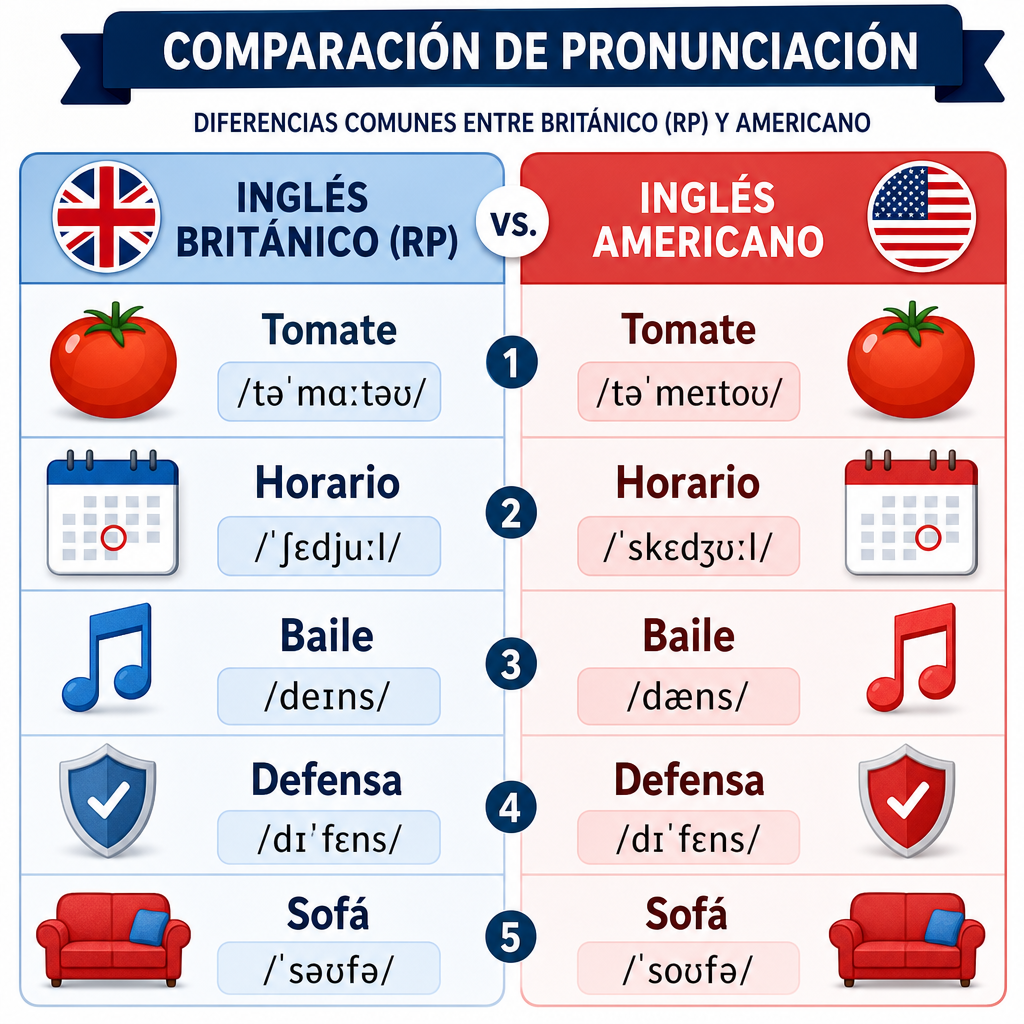
De acuerdo con la imagen adjunta, look at the comparison chart below showing phonetic differences between British and American pronunciations of common words in pop culture. Based on the chart, which statement correctly explains how these accent differences can impact a non-native listener's comprehension?
Ver respuesta y explicación
Respuesta correcta: B. El cuadro muestra que las diferencias entre acentos involucran cambios sistemáticos en vocales y consonantes. Los hablantes no nativos deben entrenar su oído para reconocer estas variaciones fonéticas comunes y mantener la comprensión de los medios angloparlantes.
Pregunta 10DifícilArgumentar
During a class debate about media consumption, a student argues: "We don't need to practice shadowing because we can just read the subtitles on Netflix." Which of the following arguments best counters this statement, explaining the real-world value of shadowing?
Ver respuesta y explicación
Respuesta correcta: B. El shadowing es una técnica activa de producción oral que ayuda a asimilar la prosodia (ritmo, entonación, pausas) y el habla conectada, beneficios de producción y fluidez que la lectura pasiva de subtítulos no puede proporcionar.