10 preguntas de selección múltiple · Dificultad: Mixto · Unidad: Comunicación avanzada en inglés. Elige una alternativa y revisa la explicación.
Pregunta 1FácilComprender y aplicar
When delivering a formal TED-style talk in English, which of the following is considered an effective non-verbal communication technique to engage the audience?
Ver respuesta y explicación
Respuesta correcta: B. Maintaining eye contact is a fundamental non-verbal communication skill in public speaking. It helps establish a connection with the audience, projects confidence, and keeps listeners engaged, which is essential for TED-style presentations.
Pregunta 2FácilComprender y aplicar
If you are giving an academic presentation in English and want to transition to a new slide to show your results, which phrase is the most appropriate and formal?
Ver respuesta y explicación
Respuesta correcta: A. 'Let's move on to the next slide, which illustrates our key findings' is a professional, cohesive, and formal transition phrase suitable for academic presentations at the school or university level.
Pregunta 3FácilComprender y aplicar
During a class debate in English, a classmate presents an argument you disagree with. What is the most polite and formal way to initiate your counterargument?
Ver respuesta y explicación
Respuesta correcta: B. 'I see your point, however, we must also consider that...' is a respectful and academically appropriate way to acknowledge an opponent's perspective before introducing a counterargument during a formal debate.
Pregunta 4IntermedioAnalizar
Read the following excerpt from a student's introduction in a formal presentation:
'Good morning, everyone. Today, I want to talk about renewable energy. It is very important because fossil fuels are bad.'
How could this introduction be improved to better fit a formal academic presentation or a TED-style talk?
Ver respuesta y explicación
Respuesta correcta: B. Formal presentations require precise, academic vocabulary (e.g., 'detrimental' instead of 'bad') and an engaging opening hook to capture the audience's interest, rather than relying on overly simplistic statements.
Pregunta 5IntermedioAnalizar
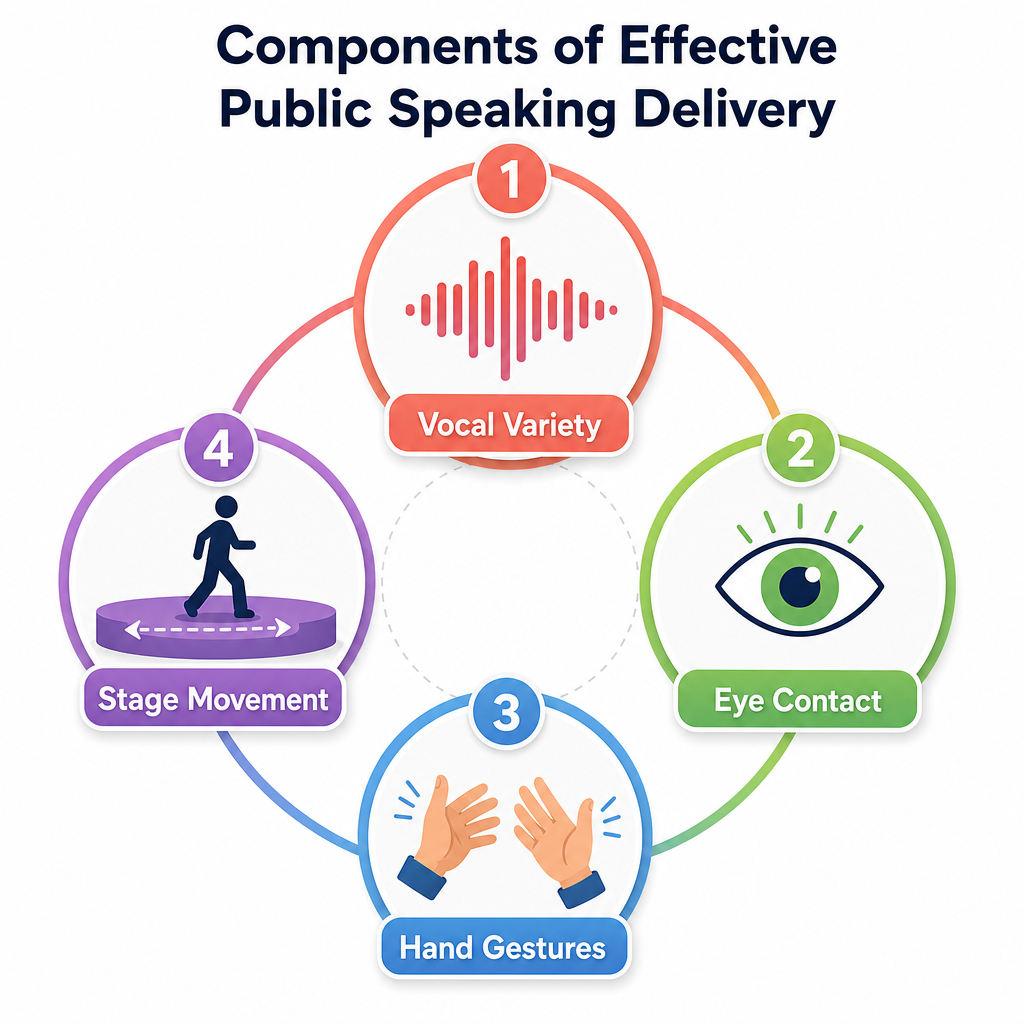
De acuerdo con la imagen adjunta, look at the diagram showing different components of public speaking delivery. According to the diagram, which aspect of non-verbal communication is most directly associated with using physical space to create a dynamic connection with the audience?
Ver respuesta y explicación
Respuesta correcta: B. The diagram illustrates 'Stage Movement' as the category involving purposeful walking and positioning on the stage to dynamic effect, helping the presenter connect physically with different sections of the audience.
Pregunta 6IntermedioComprender y aplicar
During a Q&A session after your presentation, an audience member asks a complex question that you do not immediately know how to answer. What is the best strategy to maintain fluency and professionalism?
Ver respuesta y explicación
Respuesta correcta: B. Acknowledging the question (e.g., 'That is an interesting question, thank you for asking...') allows you to maintain composure, demonstrate analytical thinking, and handle the pressure professionally, even if you do not have an immediate answer.
Pregunta 7DifícilEvaluar y argumentar
In a formal academic debate on sustainable city planning, a speaker says: 'Implementing mandatory bike lanes is the absolute best and only solution to reduce city pollution.'
Which of the following is the most constructive, academically rigorous, and fluent counter-argument to this statement?
Ver respuesta y explicación
Respuesta correcta: A. Option A uses formal academic language, acknowledges the valid part of the opponent's argument ('While bike lanes certainly...'), and introduces a nuanced, evidence-based alternative concept ('multi-modal approach'), which demonstrates high-level fluency and argumentation.
Pregunta 8DifícilAnalizar
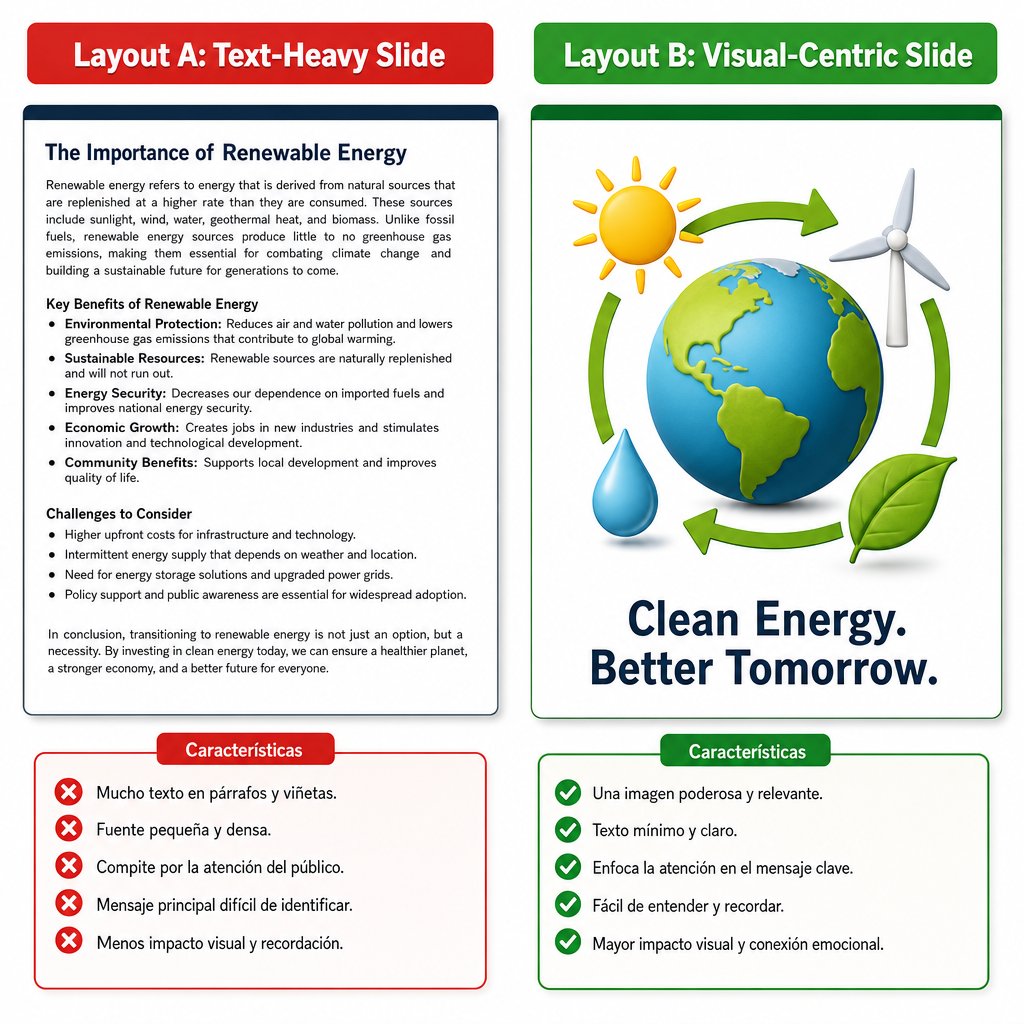
De acuerdo con la imagen adjunta, observe the visual aid layout options in the provided diagram. If you are preparing a TED-style presentation about the psychological impact of social media, which layout strategy would best support your delivery and maintain high audience engagement?
Ver respuesta y explicación
Respuesta correcta: B. TED-style presentations heavily rely on visual storytelling. Layout B (minimal text with an impactful visual) is the most effective because it prevents the 'cognitive overload' of reading dense text while listening, ensuring the focus remains on the presenter's verbal delivery.
Pregunta 9DifícilEvaluar y argumentar
Analyze the following strategy used by a speaker during a formal presentation:
'The speaker deliberately pauses for three seconds after presenting a shocking statistic about global water scarcity, looks at the audience, and then lowers their vocal pitch to deliver the next sentence.'
What is the primary communicative purpose of combining these specific verbal and non-verbal techniques?
Ver respuesta y explicación
Respuesta correcta: C. Pausing after a major point (the 'dramatic pause') paired with eye contact and a lower vocal pitch is a sophisticated public speaking technique used to emphasize critical information, create suspense, and establish an emotional connection with the audience.
Pregunta 10DifícilComprender y aplicar
Which of the following cohesive devices and discourse markers are most appropriate to use when you want to synthesize multiple perspectives and conclude a formal academic presentation?
Ver respuesta y explicación
Respuesta correcta: B. Option B uses high-level, sophisticated discourse markers ('In light of the evidence', 'synthesize', 'overall consensus') that are ideal for summarizing complex academic debates and delivering a professional conclusion in English.