Test: Vocabulary and international exam preparation
10 preguntas de selección múltiple · Dificultad: Mixto · Unidad: Gramática y vocabulario avanzado. Elige una alternativa y revisa la explicación.
Pregunta 1FácilComprender y aplicar vocabulario
Choose the correct phrasal verb to complete the sentence commonly found in informal English conversations: 'I had to ________ my trip to Valparaíso because of the heavy rain.'
Ver respuesta y explicación
Respuesta correcta: A. 'Call off' significa cancelar, lo cual calza perfectamente con la razón de la lluvia fuerte. 'Put up' (tolerar u hospedar), 'call on' (visitar o pedir la palabra) y 'carry out' (realizar) no tienen sentido en este contexto.
Pregunta 2FácilComprender y aplicar vocabulario
In the context of the TOEFL or IELTS writing section, which academic transition word best fits the blank to show a contrast? 'The government implemented new recycling policies. ________, public participation remained low during the first semester.'
Ver respuesta y explicación
Respuesta correcta: C. 'However' (sin embargo) introduce un contraste directo entre la implementación de políticas y la baja participación ciudadana. 'Furthermore' e 'In addition' agregan información, mientras que 'Consequently' indica causa-efecto.
Pregunta 3FácilComprender y aplicar vocabulario
In an FCE Speaking exam, candidates are often asked to express their opinion. Which of the following idiomatic expressions is the most natural way to say that you agree completely with your partner?
Ver respuesta y explicación
Respuesta correcta: A. 'I couldn't agree more' es una expresión idiomática muy común y natural para mostrar total acuerdo en exámenes internacionales. 'I am in the same boat' se usa para situaciones difíciles compartidas, 'see eye to eye' no lleva 'with your mind' (es 'see eye to eye with someone'), y 'I agree you totally' es gramaticalmente incorrecto.
Pregunta 4IntermedioAnalizar y sintetizar información
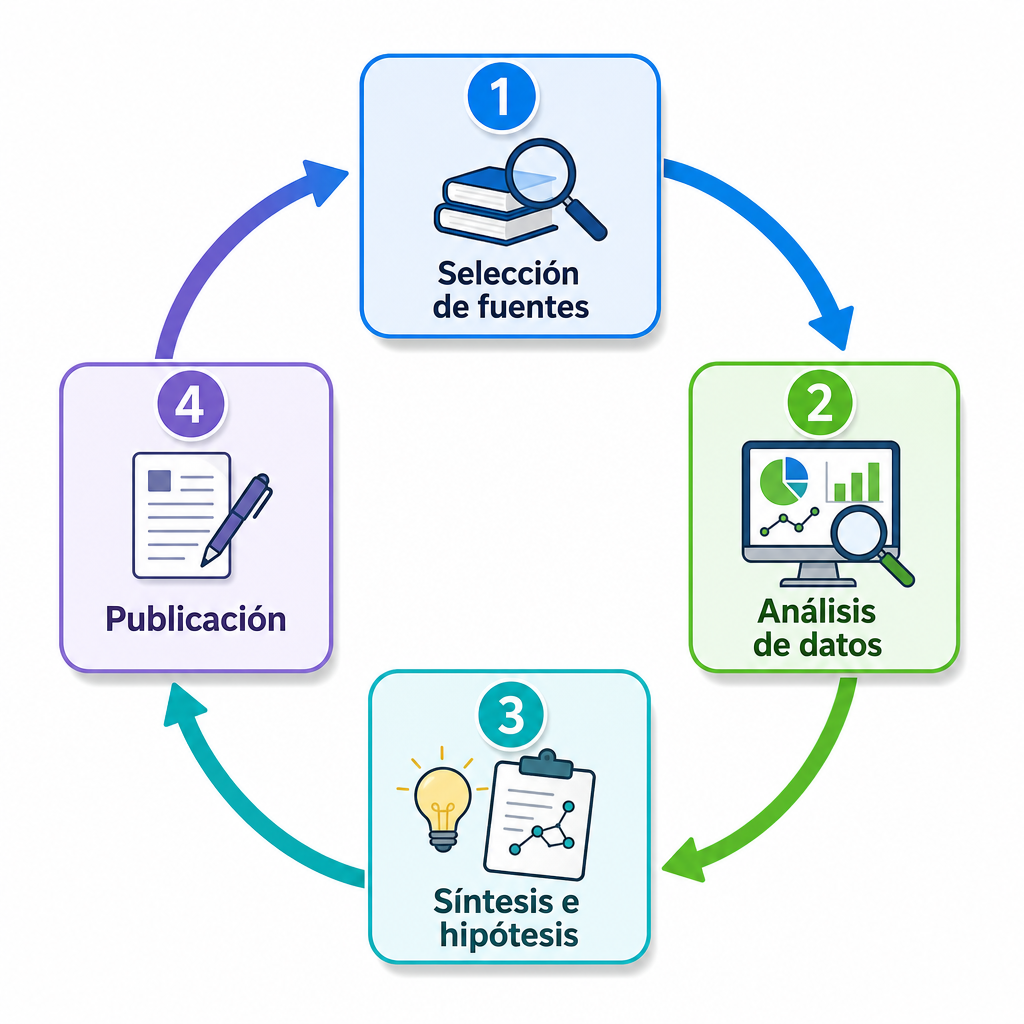
De acuerdo con la imagen adjunta, read the following short text, which simulates an IELTS Reading passage, and look at the diagram. According to the diagram and the text, which phase of the academic research cycle is most directly threatened by a lack of peer-reviewed sources?
'In academic research, the validity of a literature review depends heavily on the quality of the sources. Researchers must carefully screen articles to avoid biased data before moving on to the synthesis and formulation of their own hypotheses.'
Ver respuesta y explicación
Respuesta correcta: A. El texto menciona que la validez depende de la calidad de las fuentes y que se deben filtrar los artículos para evitar sesgos antes de la síntesis. Por lo tanto, la fase de 'Source Selection' (Selección de Fuentes) es la afectada directamente por la falta de fuentes revisadas por pares.
Pregunta 5IntermedioComprender y aplicar vocabulario
During a TOEFL listening task, a professor says: 'The committee decided to ________ the proposal because it lacked empirical evidence.' Which academic phrasal verb best completes the statement?
Ver respuesta y explicación
Respuesta correcta: A. 'Turn down' es un phrasal verb avanzado que significa rechazar (en este caso, una propuesta por falta de evidencia). 'Look into' significa investigar, 'bring up' es mencionar un tema, y 'take over' es tomar el control.
Pregunta 6IntermedioComprender y aplicar vocabulario
In the FCE Use of English section, you must recognize word families. What is the correct academic noun form of the verb 'distribute' to complete this sentence: 'The unequal ________ of wealth is a major concern for modern economists.'?
Ver respuesta y explicación
Respuesta correcta: B. El sustantivo correcto derivado del verbo 'distribute' es 'distribution' (distribución). Las otras opciones son formas incorrectas o inexistentes en inglés.
Pregunta 7DifícilComprender y aplicar vocabulario
Analyze the formal register required for an IELTS Academic Writing Task 2. Which of the options is the most appropriate academic synonym to replace the underlined word in: 'The researchers found that the new treatment had some bad side effects.'?
Ver respuesta y explicación
Respuesta correcta: B. 'Adverse' es el adjetivo académico y formal preciso para describir efectos secundarios negativos ('adverse side effects') en la escritura científica y técnica. 'Nasty' es demasiado informal, 'harming' no se usa como adjetivo en este contexto, y 'troublesome' es más coloquial.
Pregunta 8DifícilComprender y aplicar vocabulario
In advanced English certifications, understanding idiomatic expressions in context is crucial. Read the dialogue:
Presenter: 'We need to finish this science project by tomorrow, but we are still missing the statistics.' Partner: 'Don't worry, I will ________ to get the data tonight.'
Which idiom best fits the blank to express making an supreme effort?
Ver respuesta y explicación
Respuesta correcta: A. 'Burn the midnight oil' significa trabajar o estudiar hasta muy tarde en la noche, lo cual encaja perfectamente con conseguir los datos 'tonight'. 'Bite the bullet' es afrontar una situación difícil con valor, 'hit the nail on the head' es acertar exactamente, y 'cut corners' es hacer algo de forma rápida y barata descuidando la calidad.
Pregunta 9DifícilComprender y aplicar vocabulario
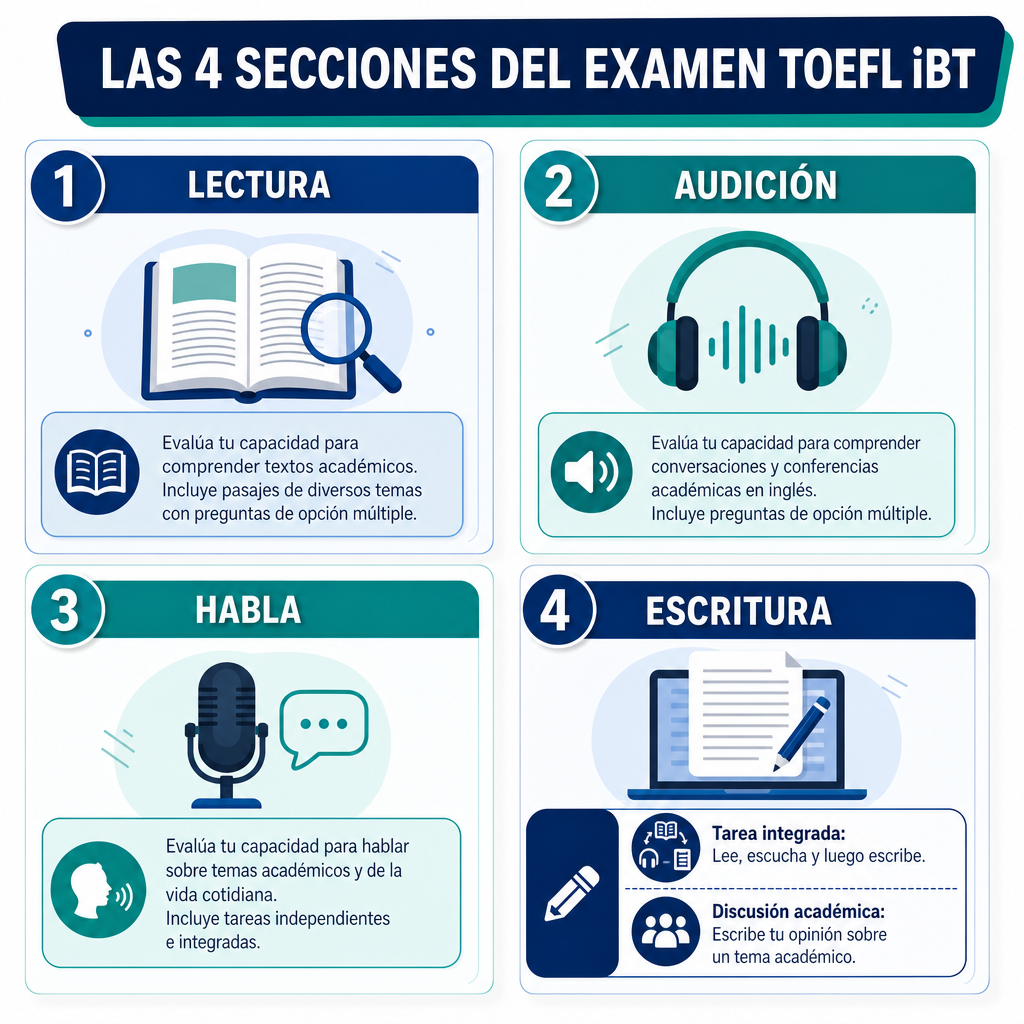
De acuerdo con la imagen adjunta, observe the infographical chart of the TOEFL iBT scoring and test structure. Based on the breakdown displayed in the image, if a student wants to optimize their exam preparation strategy, which section allows them to showcase their ability to integrate reading, listening, and writing skills simultaneously?
Ver respuesta y explicación
Respuesta correcta: D. Como se muestra en la sección 'Writing' de la infografía (que incluye la tarea integrada 'Integrated Task'), el estudiante debe leer un texto, escuchar una conferencia corta y luego escribir su respuesta, integrando así las tres habilidades.
Pregunta 10DifícilComprender y aplicar vocabulario
Choose the option that correctly utilizes advanced phrasal verbs to complete the corporate-academic report statement: 'The university board decided to ________ the new program, but they had to ________ some unexpected budget constraints first.'
Ver respuesta y explicación
Respuesta correcta: A. 'Go ahead with' significa proceder con un plan o programa, y 'contend with' significa lidiar o enfrentarse con dificultades (restricciones presupuestarias). Esta combinación mantiene el registro formal y preciso requerido.