10 preguntas de selección múltiple · Dificultad: Mixto · Unidad: Advanced Grammar & Vocabulary. Elige una alternativa y revisa la explicación.
Pregunta 1FácilComprensión lectora y vocabulario
Read the sentence and choose the correct option: 'I felt so ______ when I tripped and dropped my books in front of the whole class.'
Ver respuesta y explicación
Respuesta correcta: A. En inglés, 'embarrassed' significa avergonzado/a. Es un clásico 'false friend' (falso amigo) que los estudiantes chilenos suelen confundir con 'embarazada' (que en inglés se dice 'pregnant'). Por el contexto de caerse y botar los libros, la emoción adecuada es la vergüenza.
Pregunta 2FácilUso del lenguaje escrito
Choose the connector that best completes the sentence: 'We wanted to go to the beach; ________, it started to rain heavily, so we stayed home.'
Ver respuesta y explicación
Respuesta correcta: B. El conector 'however' (sin embargo) expresa contraste u oposición entre querer ir a la playa y el hecho de que empezó a llover. 'Furthermore' e 'in addition' se usan para agregar información, y 'actually' significa 'en realidad'.
Pregunta 3FácilComprensión de lectura y vocabulario
What is the meaning of the phrasal verb 'give up' in the following sentence? 'You shouldn't give up on your dreams of studying environmental science.'
Ver respuesta y explicación
Respuesta correcta: B. El phrasal verb 'give up' significa rendirse o dejar de intentar algo. En este contexto, se aconseja al estudiante no rendirse con sus sueños de estudiar ciencias ambientales.
Pregunta 4IntermedioUso del lenguaje escrito
Choose the option that correctly completes the sentence about globalisation and work: 'Many people think "currently" is translated as "actually" in English. However, if you want to say "Actualmente, muchas personas trabajan desde casa debido a la globalización", you should write: "________, many people work from home due to globalisation."'
Ver respuesta y explicación
Respuesta correcta: B. 'Currently' significa 'actualmente' (en el tiempo presente). 'Actually' es un falso amigo que significa 'en realidad' o 'de hecho'. Por lo tanto, para traducir la idea de 'actualmente', se debe usar 'Currently'.
Pregunta 5IntermedioComprensión de lectura
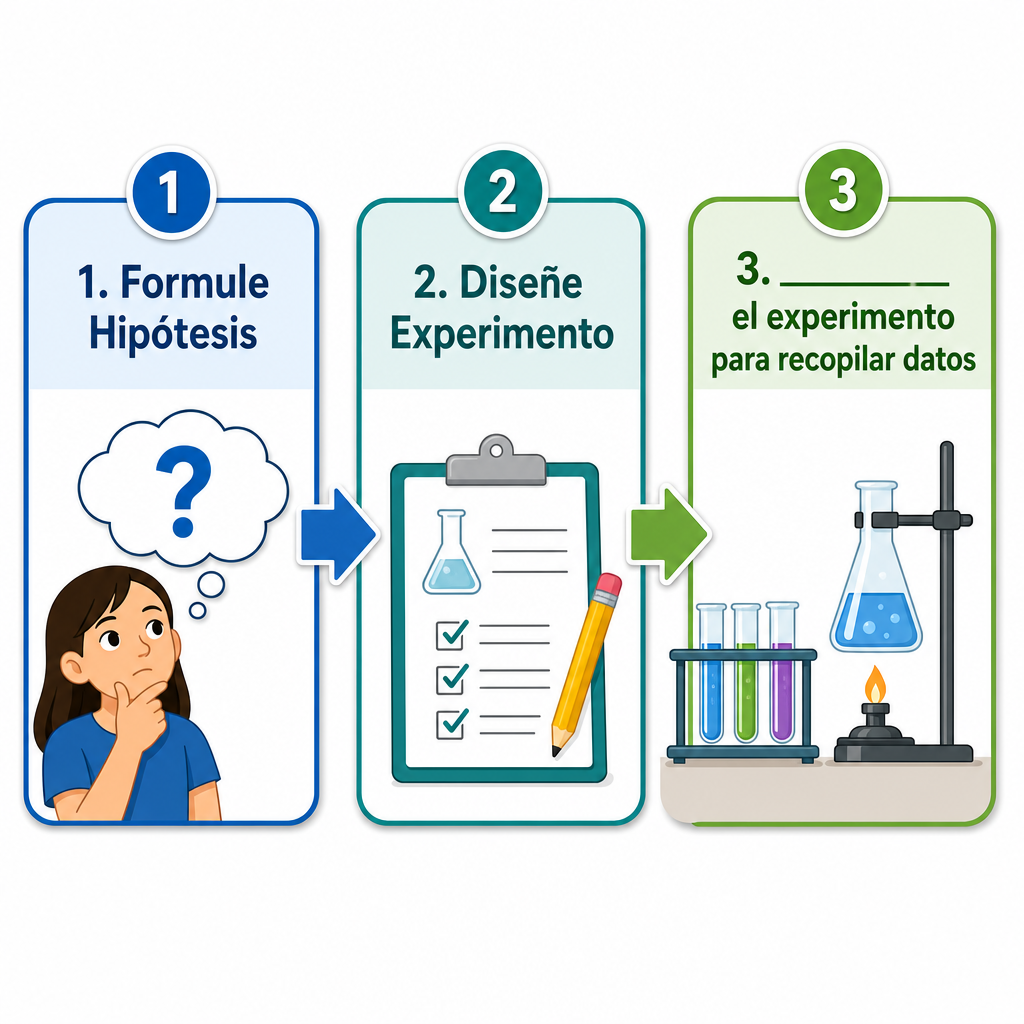
De acuerdo con la imagen adjunta, look at the diagram showing the stages of a scientific investigation. According to the diagram, which phrasal verb correctly completes the description of Stage 3?
Ver respuesta y explicación
Respuesta correcta: C. Stage 3 en el diagrama corresponde a realizar o ejecutar el experimento ('Carry out the experiment'). 'Carry out' significa ejecutar o llevar a cabo una tarea o investigación, lo cual se alinea perfectamente con la etapa del método científico mostrada.
Pregunta 6IntermedioUso del lenguaje escrito
Complete the sentence with the correct connector: 'The government has approved new laws to protect human rights. ________, they have increased funding for social integration programs for migrants.'
Ver respuesta y explicación
Respuesta correcta: B. El conector 'Furthermore' (además / es más) se utiliza para añadir información que apoya o expande el punto anterior. En este caso, añade una medida positiva adicional tomada por el gobierno.
Pregunta 7DifícilComprensión lectora y sintaxis
Which of the following sentences is grammatically correct and uses the connector 'despite' properly to discuss environmental issues?
Ver respuesta y explicación
Respuesta correcta: C. 'Despite' es una preposición y debe ir seguida de un sustantivo o una frase nominal ('the bad weather'), no de una oración completa con verbo conjugado (como en la opción A). Además, no lleva la preposición 'of' (error común por confusión con 'in spite of', que sí la lleva).
Pregunta 8DifícilComprensión y vocabulario contextual
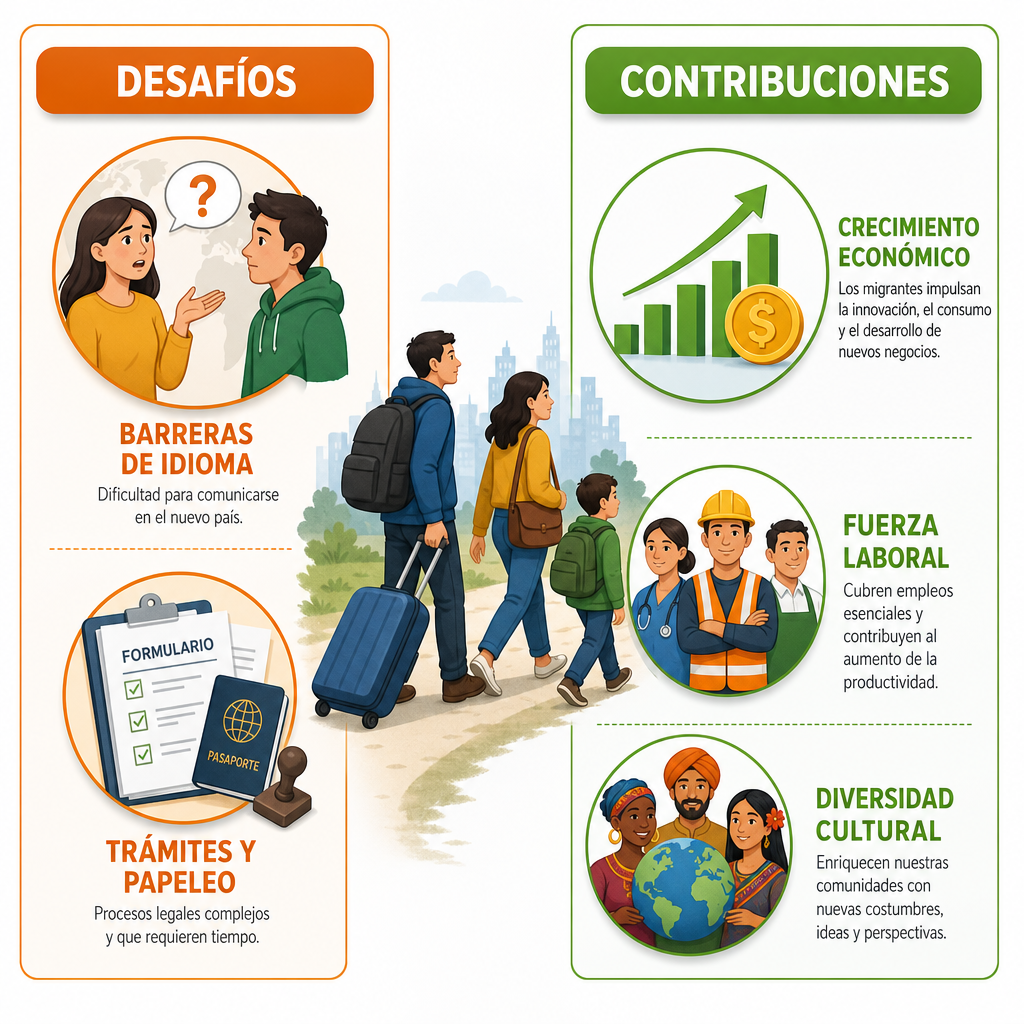
De acuerdo con la imagen adjunta, read the infographic about global migration. Based on the information presented and your knowledge of vocabulary, which option correctly completes the statement below?
'According to the infographic, many migrants face major challenges when integrating into a new society. ________, they often make significant contributions to the local economy.'
Ver respuesta y explicación
Respuesta correcta: C. La frase presenta un contraste directo: por un lado, los migrantes enfrentan desafíos ('challenges'), y por el otro, hacen contribuciones significativas ('contributions'). El conector de contraste adecuado es 'Nevertheless' (sin embargo / no obstante).
Pregunta 9DifícilUso del lenguaje escrito
Choose the option that correctly uses phrasal verbs and avoids false friends in this context: 'Due to the economic crisis, the NGO had to ______ the human rights summit until next year, but they are still ______ working with local communities.'
Ver respuesta y explicación
Respuesta correcta: C. 'Put off' significa posponer (apropiado para postergar la cumbre hasta el próximo año). 'Currently' significa 'actualmente' o 'en la actualidad', lo que calza con que siguen trabajando hoy en día. 'Actually' significaría 'en realidad', lo cual no es el sentido temporal buscado.
Pregunta 10DifícilAnálisis y síntesis de textos
Read the short paragraph about technology and choose the correct sequence of connectors to complete it:
'Artificial Intelligence is transforming our lives. ________, it helps doctors diagnose diseases more accurately. ________, we must address the ethical questions it raises; ________, we risk losing control over our own data.'
Ver respuesta y explicación
Respuesta correcta: A. El primer espacio requiere un conector que añada información positiva ('Furthermore' o 'In addition'). El segundo espacio introduce un contraste ('However' o 'Nevertheless') respecto a los desafíos éticos. El tercer espacio requiere 'otherwise' (de lo contrario / de otra manera) para indicar la consecuencia negativa de no abordar esos desafíos.